
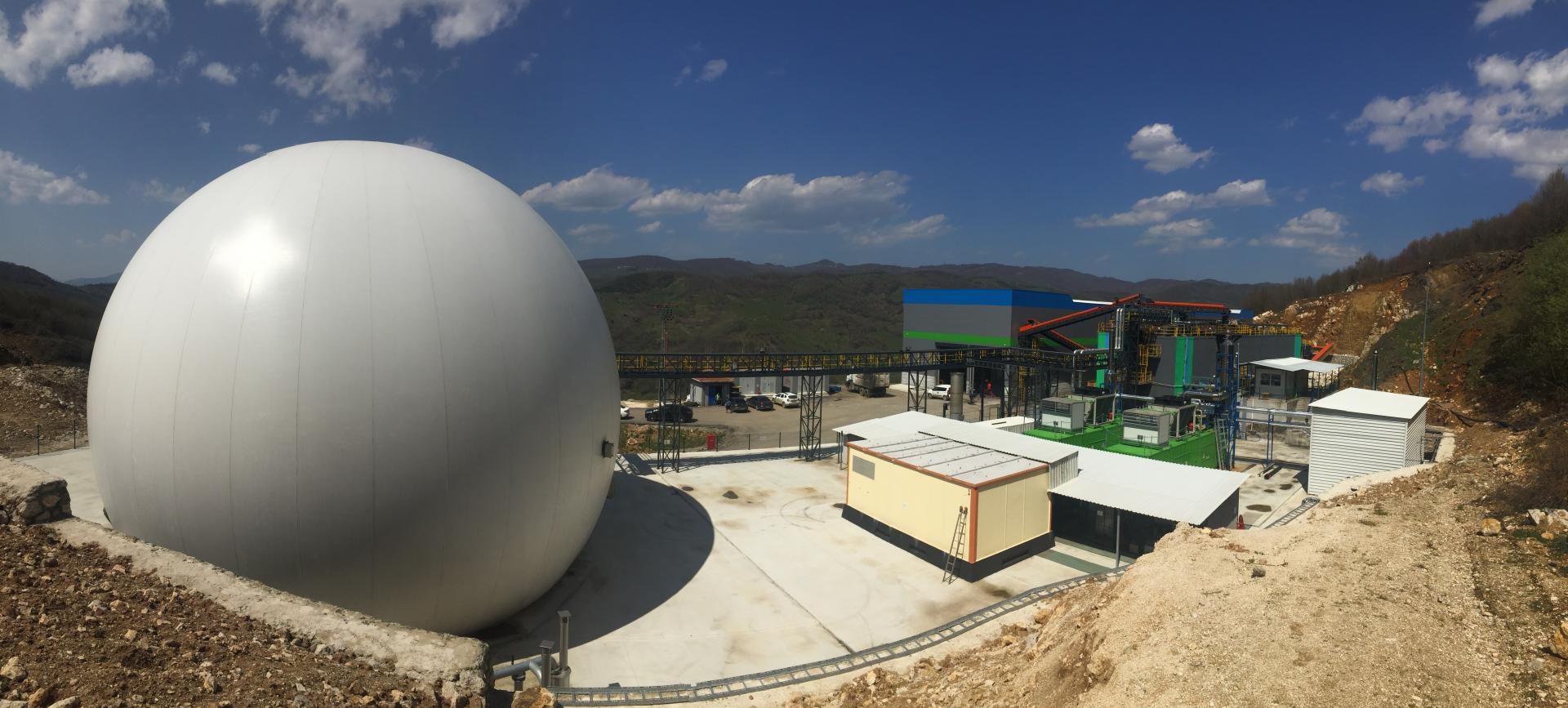
Biogas Production from Landfills and Electricity Generation with Gas Engines
Producing biogas from waste and converting it into electricity using gas engines is of great importance in the fields of waste management and renewable energy generation. This process not only provides environmentally friendly energy production but also allows for the utilization of solid waste.
Biogas Production from Waste
Solid waste, particularly organic-rich domestic and industrial waste, serves as an important source for biogas production. Organic materials within the waste are broken down by microorganisms under anaerobic (oxygen-free) conditions. As a result of this decomposition process, biogas containing methane (50-70%) and carbon dioxide (30-50%) is produced. This biogas is generated in landfill sites or biogas production facilities using specially designed anaerobic digesters.
One of the biggest advantages of this process is that it prevents the uncontrolled release of methane gas into the environment from the natural decomposition of waste. Instead, the methane gas is collected in a controlled manner and used for energy production.
Electricity Generation with Gas Engines
The biogas produced is converted into electrical energy using gas engines. These engines burn biogas to produce mechanical energy, which is then converted into electrical energy through generators. Gas engines are designed to be compatible with the low calorific value of biogas and can operate with high efficiency.
Electricity generation using gas engines ensures the effective utilization of biogas collected from landfills or biogas production facilities. This method contributes to renewable energy generation by converting waste into energy, while also reducing dependence on fossil fuels.
Economic and Environmental Benefits
Biogas production from waste and its use for energy generation offer numerous economic and environmental benefits. Firstly, the uncontrolled release of methane gas from landfills is prevented, and using this gas for energy production helps reduce greenhouse gas emissions. Methane has 25 times the greenhouse effect of carbon dioxide, so converting biogas into energy plays a crucial role in combating climate change.
From an economic perspective, biogas production reduces waste management costs and promotes energy independence. For municipalities and large-scale industrial organizations, converting biogas from landfills into energy not only lowers energy costs but also supports the utilization of waste.
Conclusion
Biogas production from waste and the conversion of this biogas into electricity using gas engines stand out as a sustainable waste management solution and a renewable energy source. This technology provides both environmental benefits and economic advantages. As an approach that will gain more importance in the future within the energy sector and waste management, it plays a critical role in reducing dependence on fossil fuels, creating a cleaner environment, and ensuring sustainable energy production.
