
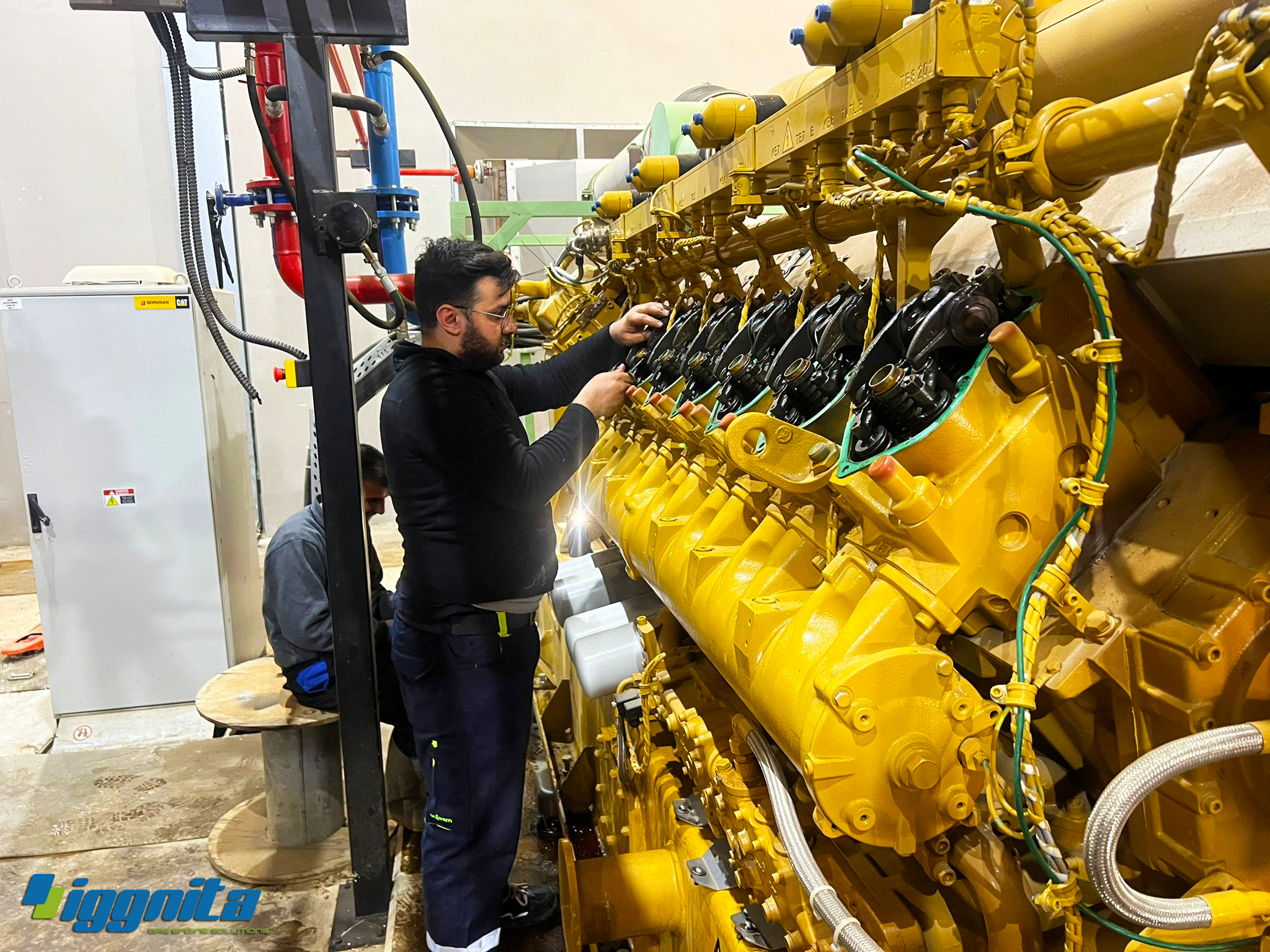
Importance of Proper Maintenance in the Energy and Industrial Sectors
If you operate in the energy or industrial sectors and produce electricity with gas engines, you understand how crucial it is for your equipment to function effectively and without risk. You also recognize that there are times when you need technical service support from qualified, expert firms. Properly planning maintenance and receiving support from service teams helps ensure continuous production for your business and maintains financial predictability.
When it comes to selecting the right firm for your service and maintenance needs, we would like to outline important factors that we believe are essential and in which our firm excels:
I. Maintenance Organization and Infrastructure
The organization and infrastructure of the service team are important for the effective provision of technical service. Authorized service providers should be managed by certified and trained personnel, and the necessary tools, measurement instruments, and hand tools must be provided. Imaging tools also play a crucial role in maintenance processes.
II. Maintenance Competencies and Training
The competencies of the technical service teams are critical for successfully executing maintenance processes. Team members should be able to assess risks and minimize response times. Training programs support the development of teams while enhancing customer satisfaction and efficiency.
III. Maintenance Processes and Collaboration
Maintenance processes should be defined with procedures compliant with standards such as ISO 9001-2005. The sustainability and continuity of these processes must be ensured. An effective communication and collaboration network should be established to respond quickly to customer requests. Maintenance guides and documentation also play a significant role in managing these processes.
IV. Spare Part Management and Material Supply
The procurement of spare parts and inventory management are essential for the effective execution of maintenance processes. Maintenance strategies should consider the versions of spare parts used and labor errors related to installed parts. The supply network must ensure fast and reliable parts procurement.
V. Effectiveness of Maintenance and Performance Evaluation
The effectiveness of maintenance processes and machine availability should be evaluated using reliability and availability measurements. Maintenance agreements and long-term service agreements (LTSAs) can be used to monitor and improve maintenance performance. Troubleshooting and diagnostic methods help quickly identify issues.
Conclusion
Regular maintenance of industrial machines is a critical step for businesses in terms of efficiency, reliability, and customer satisfaction. Well-planned and managed maintenance processes reduce production losses, generate savings, and create a competitive advantage. Continuous improvement of maintenance processes, supported by collaboration and technological innovation, enhances the sustainability and profitability of businesses.
